Today, we are talking about Mararaba. If you have ever stayed in Abuja before, the moment you hear the name Mararaba, the first thing that comes to mind is a place filled with people — a very busy and crowded community. It is known for business activities, movement, and affordable living. Mararaba sits just outside Abuja, and many people who work in the city live there because of lower costs.
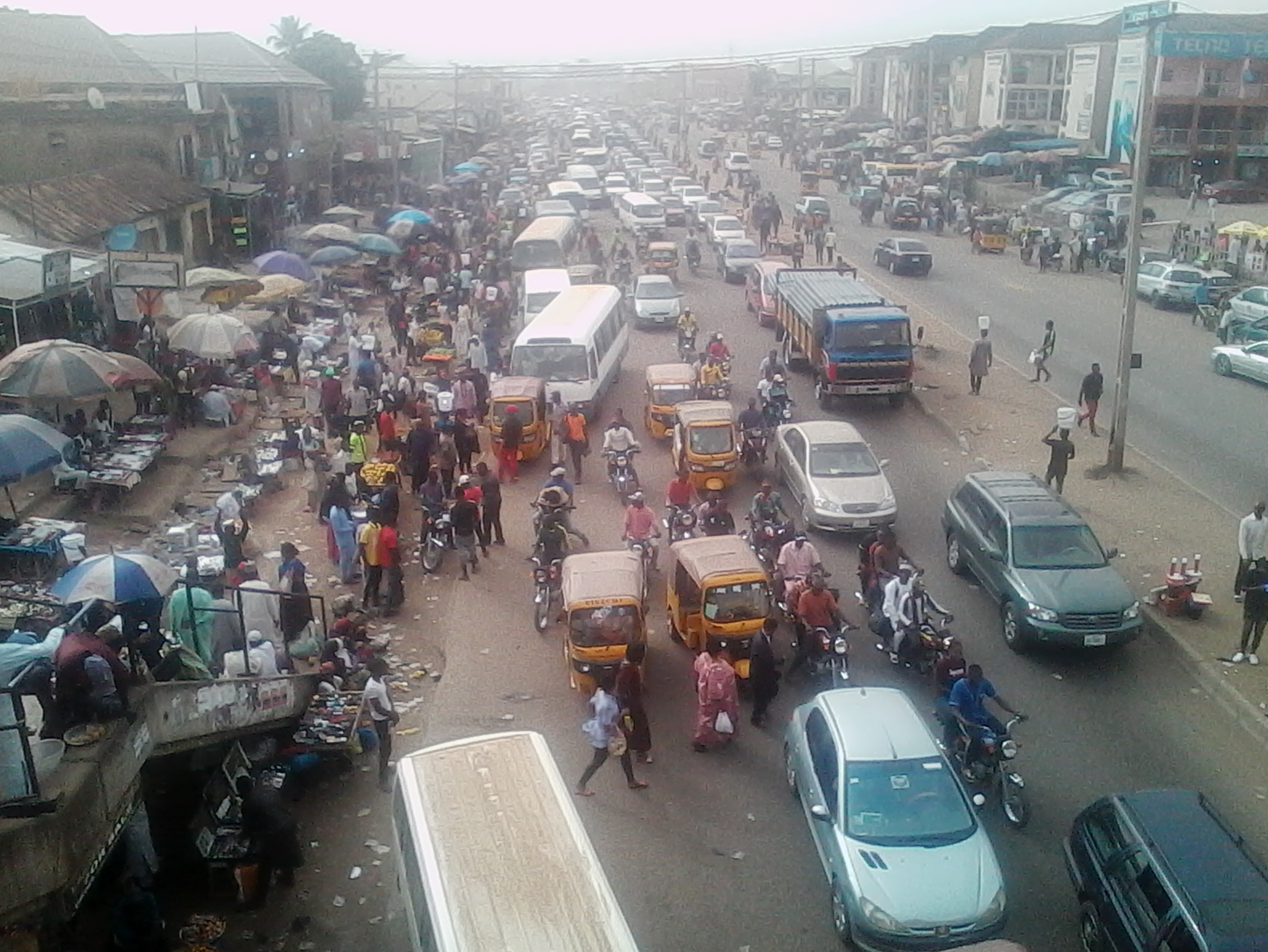
Local market activity in the Mararaba–Karu axis. Source: Wikimedia Commons.
One thing that stands out immediately in Mararaba is how packed and unorganized the environment feels. Buildings, shops, vehicles, bikes, and keke (tricycles) are all closely arranged with very little space. Movement can be stressful, especially on the roads. The last time I visited, traffic was so tight that our vehicle and keke beside us were struggling to pass at the same time. The roads were rough, and the congestion made movement slow and uncomfortable.
Environmental cleanliness is also a major concern in Mararaba. Some areas have open gutters and waste bins placed very close to the roadside. Because everything is tightly packed together, the environment does not always smell fresh. Compared to Abuja city areas, Mararaba still has a lot to improve in sanitation and general environmental order.
Despite these challenges, Mararaba remains an important commercial hub. One of the main reasons I visited was to explore its popular Orange Market. The market is well known for affordable food items. Things like tomatoes, yam, meat, and other daily food supplies are usually cheaper there than inside Abuja town. Many traders and residents from Abuja even come to Mararaba to buy in bulk because of the better prices. If you are looking for fair deals on foodstuff, Orange Market is one of the places people trust.
Security awareness is also important when moving around Mararaba. Like many crowded commercial areas, there are reports of phone snatching and petty theft in busy streets. During my visit, I held my bag closely to myself to avoid any issue. Visitors and residents usually stay alert in crowded spots, especially markets and roadside areas.
Another major attraction of Mararaba is affordability of housing. Accommodation there is much cheaper compared to Abuja city. This is one of the biggest reasons many workers choose to live in Mararaba and commute daily into Abuja. Rent and general living costs are more manageable, making it a practical option for many families and young workers.
During my time in Mararaba, I also visited Daso Table Water, a local factory that produces sachet water and water dispensers. One of the key challenges they mentioned was electricity. Power supply in the area is often unstable, and businesses sometimes struggle because of irregular light. This reflects a broader infrastructure issue affecting many parts of the community.
Overall, Mararaba is a place of contrasts. It is busy, crowded, and less organized than Abuja city areas, with visible environmental and infrastructure challenges. Yet it remains active, affordable, and commercially important, especially for trade and housing. For many people working in Abuja, Mararaba provides a practical place to live and do business, even with its difficulties.